

Welcome to All Groan Up by Paul Angone — a place for twenty-somethings asking “what now?” Snag a free copy of the 21 Secrets for your 20′s ebook (free for a limited time) and pre-order the full release book coming this July 1st — 101 Secrets for your Twenties (Moody Publishers)
1. Never looking at your budget and never making a budget is the exact same thing.
2. The possibility for greatness and embarrassment both exist in the same space. If you’re not willing to be embarrassed, you’re probably not willing to be great.
3. Feel no shame in seeking help from a counselor or therapist. We all have crap we try to wrap and hide under the Christmas tree. Get rid of it before it smells up your entire holiday.
4. All job listings on Craigslist lead you to a warehouse in downtown LA “wearing something nice with shoes you can walk in”.
5. Don’t ever, ever check Facebook when you’re:
A. Depressed
B. Drinking.
C. Depressed and Drinking.
D. Unemployed.
E. Anytime after 9:17 pm.
F. Struggling with being blessed with singleness while all your friends seem to be blessed with 2.4 kids and that blazing white-picket-fence shining with the glory of Jesus Christ himself.
6. All those amazing college friends you swore you’d never lose contact with after college yeah, well, you might lose contact. Moving all over the country, getting married, having kids, all make that forty-five minute conversation with your sophomore roommate a little more complicated than it used to be over a game of Mario Kart. Making and keeping friends in our twenties takes intentionality.
7. Your twenties will produce more failures than you’ll choose to remember. The key is when you fail, don’t begin calling yourself a failure.
8. Every break up has two break ups. I’m no physicist, but this is a law of physics, of this I am certain. Yes you’ll have the first tearful “It’s over” sitting in the front seat of your Honda or on a park swing. Then 1-2 months later after there’s “been talk”, you’ll have the “real breakup” because she forgets to call like she used to or he checks out the waitress like he’s a judge for Miss USA. And gird those loins because in the second break up there will be a lot more breaking.
9. The Freshman-Fifteen is nothing compared to the Cubicle-Cincuenta. Don’t sit at your computer perched like a Roman gargoyle. Don’t let office birthday cake be forced on you like a cigarette behind your middle school. Bust out before your butt does.
10. And yes, cubicles don’t make sense to anybody other than upper-management. I would be willing to bet that only 3% of all “Cubicle Americans” actually have a positive outlook on life. And half of that 3% is stealing from their company.
11. If at some point between 22 – 27 you feel like you’re six years old again, lost and alone at the San Diego Zoo (it’s a big-frickin-zoo), frantically searching for a familiar face – hold tight, you’re experiencing a bit of a Quarter-Life Crisis. Stay put. Pray a lot. And in no time someone will call your name across the loud speaker to tell you where you can be found.
12. Reckless drinking and reckless flirting have a direct correlation. Friends don’t let friends drive, or flirt, drunk.
13. If you grew up going to church, at some point in your 20′s you’ll probably stop going to church. If you grew up with faith as a central part of your life, at some point in your twenties faith might move to the outskirts of town next to the trailer park and three-legged squirrel refuge. Your twenties are a process of making faith your own apart from your parents and childhood. Sometimes that means staggering away so you know what you’re coming back to.
14. Don’t ever begin dating someone you first met whilst in swimsuits. Doubly-don’t if you’re both in swimsuits whilst holding an alcoholic beverage.
15. Obsessive Comparision Disorder is the smallpox of our generation. 9 out of 10 doctor’s agree this disorder is the leading cause to eating a whole sleeve of Oreo’s while watching Real Housewives of OC. Say no to obsessive comparison disorder before it starts. Remember everyone’s too busy putting a PR spin on their Facebook profile to care much about yours.
16. Life will never feel like it’s “supposed to”. Being twentysomething can feel like death by unmet expectations. However, let me be so brash to say that you are right now, at this moment, exactly where you need to be. But you’ll only be able to see that five years and thirty-eight days from today.
17. You might have your first kid and realize what it’s like to be young, a parent, and have no freaking clue what you’re doing. And for the first time in your life, you also might actually understand your parents for the first time.
18. Marriage WILL NOT fix any of your problems. No, instead marriage will put a magnifying glass on how many problems you really have. We grow up carrying bags with our insecurities, fears, bad relationships, problems with our parents — you name it. Begin to ditch these bags now. Newly married and living in a small apartment is no place to store a luggage set full of shiz.
19. An assortment of crappy jobs are a twentysomething rite of passage. Figure out what you need to learn there and learn it. If you don’t, an assortment of crappy jobs might be your thirty, forty and fiftysomething rite of passage as well.
20. Great ideas alone mean nothing. Your ability to persevere through 16 major setbacks, a lack of passion, forgetting why you started this great idea in the first place, and all the people who allude that your great idea is actually quite terrible — well, that means everything.
21. The grass is always greener on the other side, until you get there and realize it’s because of all the manure.
Snag the 21 Secrets for your 20s eBook! For Free.
Today’s post comes from Amanda Abella, a personnel administrator for a Miami-based employment agency and a freelance writer. When she is not helping recruiters or writing for clients, she runs Grad Meets World, a popular Gen Y blog where she discusses health, career, personal finance, entrepreneurship, and more. She is also the author of the highly anticipated ebook Grad Meets World Ultimate Guide: The First Year Out of College.
As members of “The Lost Generation” we are constantly being told how screwed we really are. How our unemployment rates are through the roof. How we’ll be lucky to get Social Security. How we’re never going to retire. How we’ll never make enough money. How we’re lazy and entitled. Etc, etc, etc.
Picture from Reuben via Creative Commons
Consequently, so called “experts” are always trying to give us advice – albeit mostly horrible advice – but advice none the less. Granted, some of the advice given to us is golden and proven to be true through decades of experimenting. However, there are just words of wisdom we really should stop listening to.
1. Pay attention to the news. It will make you an informed human being.
One of the first things I tell Millennials who read my blog is to stop paying attention to the news. It won’t really make you all that informed, it’ll just scare the pants off of you.
Let me explain. Have you ever noticed how no one ever really mentions when the stock market is having a decent day? Instead they focus on unemployment numbers. On the other hand, when stocks are tumbling it’s really all they talk about for hours on end. This in turn scares young investors like ourselves and makes us feel hopeless as we come of age during what seems like an impending financial shiz show of apocalyptic doom.
I’m not a conspiracy theorist by any means, but I can see that our media outlets are sensationalized. If you really need to know the headlines of the day just ask around. There’s really no need to spend hours brooding over whatever the news says.
Stop putting so much emphasis on the news and watch how much less stressful your life becomes. Remember, we’re not the first generation to go through hard times and we certainly won’t be the last.
2. Don’t invest in this volatile market.
I understand that many of you are scared when you see that stock ticker at the bottom of the screen, but this could quite possibly be the worst advice I’ve ever heard. If you are in your 20s there’s no reason you shouldn’t be trying your best to max out that 401k, IRA or brokerage account. In fact I can give you three great reasons why you SHOULD be investing.
A. You’re young. You have plenty of time to ride out the markets. Markets that proved to be resilient over the entire course of the 20th century amid a dozen recessions, The Great Depression and countless expensive military events.
B. If your employer is matching any of your 401k contribution you’d be giving up free money. (This one’s the real kicker, guys!)
C. Investing over time will still yield a higher return than the measly interest rates we’re getting from banks (a topic for another time).
Sure, it’s kind of scary right now, but to quote Warren Buffet who put it so brilliantly, “Be fearful when others are greedy, and greedy when others are fearful.”
3. Don’t bother starting your own business, it’ll fail.
This article made my freakin’ blood boil. As someone who makes extra money by running her own side business I was taken aback by the sheer asinine tone of this article. How dare you tell an entire generation that they’re entrepreneurship endeavors will fail? Why would we stop building and creating work for ourselves, ESPECIALLY during a down economy where we can’t find those beloved corporate America jobs to begin with?
Learn this now and learn it well: businesses don’t fail, people do. We’ve got generations worth of small businesses that have proven that time and time again. And really, just take a look around the Internet and you’ll see plenty of bright eyed Millennials who have found a way to make a living by CREATING work for themselves. Does it take some balls and hard work? Absolutely. But it’s no where near as impossible as people make it seem.
Quite frankly, when you find a way to make your own money you’re not only being resourceful, you’re also pretty damn smart given the current state of the economy.
This isn’t mom and dad’s market anymore. The rules have changed for Gen Y and it’s about high time we start getting some advice that is in line with the situation we have at hand today.
What do you think?
Photo Credit: Reuben via Creative Commons

The transition into adulthood is one of the most complex and significant shifts of any generation.
That’s academician speak for: “This adult shoot ain’t easy“. Thus why the theory of Emerging Adulthood is so important and became much of the research behind THE All Groan Up that you are currently eye-frolicking on.
The theory of Emerging Adulthood is like a group of scholars rummaged through you and I’s Millennial, GenY trash one night and then presented back to us our own mail in a way that made more sense then when we read it ourselves.
So what is Emerging Adulthood?
Jeffrey Jensen Arnett, Ph.D is the leading scholar behind Emerging Adulthood, which in a nutshell suggests that the majority of twentysomethings in Westernized cultures go through a specific sort of ambiguous waiting period between the transition from adolescence to adult. The typical “adult” markers of leaving home, getting married, and having children, are no longer the indicators that you have boarded the Adult Train.
Instead, when Arnett surveyed twentysomethings the top three characteristics of becoming an adult as selected by twentysomethings were: accepting personal responsibility, making decisions apart from other influences, and financial independence from parents.
With so many twentysomethings moving back in with their parents, delaying marriage, switching jobs, moving, etc, the transition into adulthood has become delayed and subjective, no longer the black-and-white-leave-home-start-a-family-work-one-career, as it was in the past.
Some Facts of Emerging Adulthood
What Career?
The questions, confusion, and exploration of career is a huge factor in emerging adulthood and feelings of crisis in your twenties (Arnett, 2000). With this pressure to find the right career and rapid layoffs for emerging adults with little work experience,
American emerging adults find themselves “switching jobs nearly every year for a decade” (Arnett, 2008)
As well, emerging adults find themselves not exactly fitting within today’s working climate. In today’s economic crisis world wide there is little need for emerging adults to enter into the workforce as Baby Boomers hold off from retirement as they watch their 401k’s plummet and they redefine what retirement should look like. Therefore, emerging adult’s bachelor’s degree does not go far and they feel the pressure to return for further schooling and training, thus delaying a sense of stability (Arnett, 2007).
Lost and Found Identity
One of the main struggles of emerging adulthood pinpointed by research is the feeling of lost identity and self-definition amongst emerging adults. Atwood and Scholtz in Contemporary Family Therapy explain that growing up emerging adults received their self-worth through external success and accolades, so when those are removed so is their sense of worth.
Historically identity was defined in adolescence. Today identity is possibly being formed in emerging adulthood (Arnett, 2008). Emerging adults are on an intense search for personal authenticity, awareness, and personal definition. Robbins and Wilner in their book Quarterlife Crisis state that twenties are ripe with self-doubt and intense with introspection in which a college education did not necessary prepare twentysomethings for.
Leave Me Alone
Emerging Adults spend more time alone than any persons except the elderly (Arnett, 2000). In the most technologically connected generation in the history of the world, it intrigues me to no end that we are spending less physical time with real, live, human beings.
To Faith or Not to Faith
A revaluation of faith and beliefs is a central part of emerging adulthood (Shuster and Mongetta, 2009). Yet during this period, emerging adults are less likely to be involved in religious institutions and disengage from the faith of their childhood and family background (Barry and Nelson, 2008; Arnett and Jensen, 2002).
Why Emerging Adulthood Matters
As I digested Emerging Adulthood nothing tasted so sweet and fulfilling – like eating an entire cheesecake without any of the guilt or gas. Because we’ve been told our whole lives to just keep climbing those stairs. Emerging Adulthood is what happens when we actually get off the stairs and start exploring — all the dead ends and wrong turns included.
So if becoming a real live adult has not been as straightforward as you thought it would, well you my emerging adult friend, are not alone.
Please share your experience with Emerging Adulthood via the comments below
–
_______
References (Ain’t I fancy)
Arnett, J.J. (1998). Learning to stand alone: The contemporary American transition to adulthood in cultural and historical context. Human Development, 41, 295–315.
Arnett, J.J. (2000). Emerging adulthood: A theory of development from the late teens through the twenties. American Psychologist, 55, 469–480.
Arnett, J.J. (2002). A Congregation of one: Individualized religious beliefs among emerging adults. Journal of Adolescent Research, 17(5), 451-467
Arnett, J. J. (2006). Emerging adulthood: Understanding the new way of coming of age. In J. J. Arnett & J. L. Tanner (Eds.), Emerging adults in America: Coming of age in the 21st century. Washington, DC: American Psychological Association Press.
Atwood, J.D. and Scholtz, C. The Quarter-life Time Period: An Age of Indulgence, Crisis or Both?. Contemporary Family Therapy: An International Journal, 30(4), 233-250.
Barry, C and Nelson, L (2008). The role of religious beliefs and practices on emerging adults’ perceived competencies, perceived importance ratings, and global self-worth . International Journal of Behavioral Development, 32(6), 509-521.
Robbins and Wilner, (2001). The Quarterlife Crisis. New York: Putnam.
Shuster, M and Mongetta, J (2009). The influence of a small Christian university’s culture on selected characteristics of emerging adulthood. Journal of Research on Christian Education, 18, 206–234.
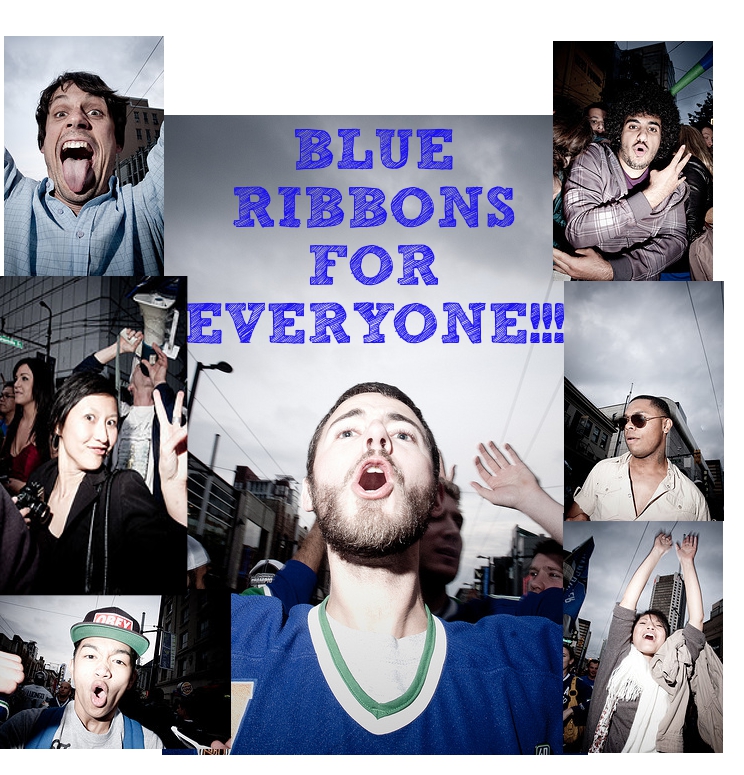
“This GenY, Millennial generation is so entitled. They grew up receiving blue ribbons their whole lives — no matter if they won or lost.”
This blue ribbon lingo is becoming the go-to. Catch-all. Rub our face in our awards like a puppy who has peed the carpet, phrase when describing the GenY, Millennial generation. Apparently we carry entitled-ness with us like Richie Rich and his thick wad of cash. But really, is GenY’s underwear really stitched from all the blue ribbons of the past? And how does affirmation fit within today’s work environment? Well read on kind person and you will be rewarded. (ironic, no?)
WHAT COLOR WAS YOUR RIBBON?
We’ve been talking a lot lately on All Groan Up about GenY with 31 Ways (and Growing) You Know You’re a GenY 20something, Why You Don’t Know GenY Like You Think You Do, and a lively discussion going on right now on Our Favorite (or Least Favorite) Aspects of GenY.
But what about all these blue ribbons? Really? We all grew up receiving blue ribbons? Huh, funny. I have slightly different memories of my childhood. Memories of hanging on the pull-up bar mercilessly like a rock climber about to fall to his death, with his entire 3rd grade class snickering behind his back.
Oh yes the blessed President’s Challenge — the day of physical testing that was the only time in my Christian elementary school where they actually tried to prove Evolution correct by showing us survival of the fittest at it’s rawest form.
I could run. I could jump. I could catch. But do a pull-up? Not if my life depended on it — which in the world of the third-grade pecking order it most definitely did. The 50 pound girl with pony-tails busting out 10 pull-ups right after me. With a My Little Pony in her left hand.
I didn’t skip home singing about the Wonders of Paul with blue ribbons whipping behind me like an Olympic athlete carrying his flag. No, I shuffled home, head hung low with the puke green Honorable Mention ribbon stuffed deep into the abyss of my front pocket. Honorable Mention. Thank you for mentioning me in front of all my friends that I was in fact that big of a loser.
BLUE RIBBON BULLSHIP
So away with you and all this blue ribbon business. It’s just not the case. We grew up with a clear understanding (and vivid daily reminders) of winners and losers. Believe you me. We grew up in a competitive, bell-curve, wait-list society. GenY doesn’t want your affirmation and blue ribbons because we feel entitled to them, no we want them because we’ve been in a cage-match to win them our entire lives. From our parents. Our coaches. Our teachers. And now our bosses. We don’t want to be honorably mentioned just because we show up. We want blue ribbons because that’s how we have been trained to win.
GENY AND AFFIRMATION
So shucks, let me apologize for my generation that we desire to be included in something beyond our pay grade that we will then in turn give our ALL towards with an inherent drive towards excellence, and might just end up creating something beyond expectations.
And golly gosh, you need to tell us good job once in a while (or all the time) and tell us whether or not we’re on the right track. Oh my, the horror.
Call me crazy but I’d rather have an employee that has the desire, talent, and drive to create an excellent marketing plan, a killer website, an appealing brochure, but who also needs to be reigned in from time to time and bought a chocolate chip cookie. Then the employee who clocks in clocks out, will never raise their voice, will never have an original thought or idea, and really stopped working for you seven years ago. You just never knew it.
Why not give GenY blue ribbons? Why not congratulate them for a job well done and look for ways to affirm positive behavior? Why not stoke that creative fire and drive with accolades? In turn, GenY will keep giving you results. I’m no manager but gee whiz, blue ribbons for results sounds like a good trade off to me.
Sure GenY might be higher maintenance, but so are BMW’s. Keep investing in GenY and I believe their performance will far outweigh the cost.
____
Thoughts on GenY and Blue Ribbons? How do you see it? Love to hear your thoughts below
Who is GenY? Everyone wants to know. Like Dos Equis’ Most Interesting Man in the World — GenY seems to be a walking paradox that makes for great entertainment.
However, do we really have a clue who GenY really is? Everyday a new article comes out from “experts” who have GenY-Millennials-Twentysomethings-Emerging Adults-those fortunate to be born in the 80′s when George Michaels and Boy George reigned supreme (thankfully sparring us from having to buy tight cut-off jean shorts because we were five years old), completely figured out.
Do a phone survey of 143 twentysomethings and you’ve got yourself a theory and a platform.

As I wrote about in my rebuttal to David Brooks New York Times article “It’s Not About You”, there is a growing debate regarding who GenY is and who the older generation thinks GenY should be.
We think an entire GenY generation can be summed up with a two paragraph label like a box of Wheat Thins.
GENERATIONAL STEREOTYPING
Why is it that stereotyping certain topics is completely taboo, yet stereotyping entire Generations is all the rage. As if GenY, Millennials, Twentysomethings are this mass amoeba completely identifiable if you can study just one piece. And whomever gains the most exposure, and yells the loudest, holds the power to define us all. (And the power to make the most money because they have the answer)
But GenY is not alone in our yearning to point and say, this is who they are. We do it to the Boomers too. And the Greatest Generation. But is this fair?
It possibly makes the most sense with the Greatest Generation as they rallied, bonded together, and were each independently, and collectively, effected through events like the Great Depression and WWII.
But what does GenY have as our defining events? The Great Recession and 9/11? The verdict is out on whether or not the Great Recession will shape and define our collective identity. But in regards to 9/11, as I wrote in a previous article Amusing Ourselves to Death, “collectively we did not act upon the events of 9/11. No, we consumed 9/11.”
Did 9/11 do anything to actually change most our lives other than waiting in longer lines at the airport?
SO WHO IS GENY?
I wrote 31 Ways You Know You’re a GenY Twentysomething, which has become about a 100 ways now due to the amazing comments from fellow GenY-ers. Thus again showing me there is no one set list, no one-size-fits-all GenY characteristics.
Because we are not a list. We are individuals with unique talents and interests.
Some in GenY will act entitled, some won’t.
Some will have an IV of Technology hooked to their veins, some will like the feel of a good book.
Some will persevere through difficulty, some will take repeated naps.
Some will get married young, some will cast marriage off like a pair of worn tennis shoes.
Yes we can make generalizations, but let’s be careful not to treat generalizations as facts. Because honestly you don’t know – I don’t know, GenY as well as we think we do.
And honestly, I’m sick of us pretending like we do.